
Erik Thedéen: Simplify banking regulations – without compromising resilience
Presentation There is great value in simplifying the current extensive regulatory framework for banks, but the reforms must not be carried out at the expense of financial stability. That was the message Erik Thedéen, speaking as Governor of the Riksbank, emphasised at the Finance Sweden’s banking conference, when he argued in favour of a more effective regulatory framework that preserves the banks’ resilience.
Date: 05/11/2026 16:00
Speaker: Governor Erik Thedéen
Place: Swedish Bankers' Association, Grand Hôtel, Stockholm
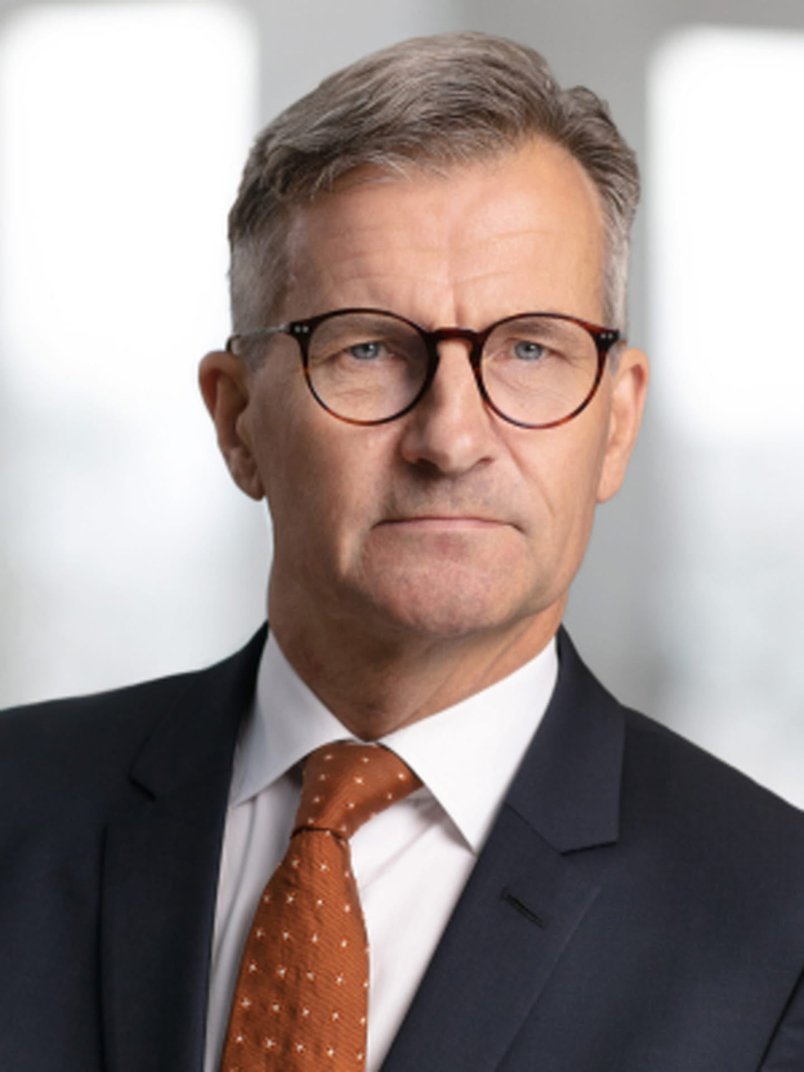
Erik Thedéen, governor.
“Strong banks are underpinned by strong regulation. We must not forget the benefits of the resilience that has been built up since the financial crisis, even if memories of the crisis are fading,” said Mr Thedéen. Furthermore, as financial stability is a global asset it is important that all countries, including the EU, comply with the global minimum standards for banking regulation.
The lessons learnt from the pandemic show why robust and well-capitalised banks are so important. In contrast to the financial crisis, the banks were able to continue lending to households and companies when the economy came under severe strain. This was no coincidence, but rather the result of the higher capital and liquidity requirements introduced under the Basel III framework. Well-capitalised banks have proved to be essential for ensuring that lending continues to work, even in uncertain times.
At the same time, Mr Thedéen notes that today’s regulatory framework has become increasingly complex. He therefore welcomes the international discussion on how banking regulation can be simplified. One area is the many parallel capital requirements that banks must currently meet.
“Future reforms should focus more on core Tier 1 capital and create a more transparent system. However, simplifications must not result in lower capital levels or smaller liquidity buffers. The aim is, rather, to make regulation more transparent and effective, whilst maintaining the banks’ resilience,” said Mr Thedéen.
Erik Thedéen also warns that the world is facing new uncertainties. The rapidly growing sector outside the banking system – known as non-bank financial institutions (NBFIs) – and developments in artificial intelligence are making it more difficult to assess future risks. In his view, this strengthens the case for safeguarding a robust banking system even as the regulatory framework is modernised.
He also underlined the importance of Sweden continuing to align itself with international standards in the financial markets. In this context, he referred to the SWESTR reference rate, which is based on actual transactions and is in line with international developments. “A continued transition to transaction-based reference rates such as SWESTR is considered important for strengthening confidence in the Swedish financial system and ensures that Sweden does not fall behind global developments. I therefore urge the industry to continue its work on transitioning to reference rates based on actual transactions,” concluded Mr Thedéen.
Mr Thedéen comments on today’s outcome for the Flash-CPI for October:
“The outcome showed that inflation in October was significantly lower than our September forecast. But we know that individual monthly outcomes can vary somewhat. Prior to our next decision, in mid-December, we will have received a further outcome for inflation as well as other information on developments in Sweden and abroad, which will analyse to assess the outlook for inflation and economic activity.”