
Aino Bunge: The Riksbank’s role in turbulent times
Presentation “Geopolitical uncertainty affects all areas of the Riksbank’s work. Our tasks are clear. We shall contribute to low and stable inflation, a stable financial system and the ability to make payments even in times of crisis and war. This creates the conditions for favourable economic development in Sweden.” These comments were made by First Deputy Governor Aino Bunge, speaking about the economic situation and the Riksbank's work on preparedness today at AMF’s spring forum.
Date: 14/04/2026 08:30
Speaker: First Deputy Governor Aino Bunge
Place: AMF’s spring forum
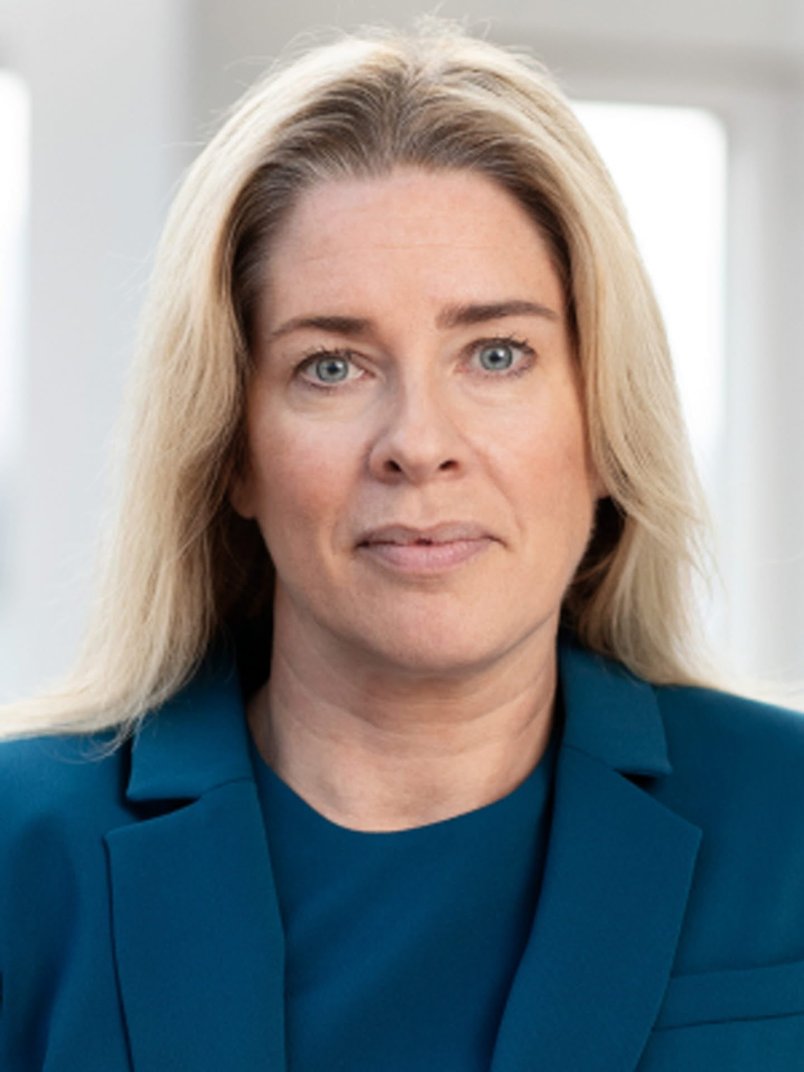
Aino Bunge, first deputy governor.
The war in the Middle East has led to rising oil and gas prices, increased uncertainty and major shifts in the financial markets. Higher energy prices affect many parts of the economy, both directly and indirectly, and thus also the prices consumers face. ”How great the impact will be on inflation depends on how long the war lasts, how rapidly production in the region can be resumed and how companies and households react to the situation. All of this is very difficult to assess at this point in time, which made it reasonable to leave the rate unchanged at our last meeting."
In the uncertain international situation, the Swedish economy has an advantage in that the CPIF inflation has fallen back close to the target, Ms Bunge pointed out, and according to the Riksbank's latest forecast, inflation is expected to fall below the target this year. In addition, the latest inflation outcome was clearly lower than expected. At the same time, economic activity remains weak, although there was some improvement last year.
“If supply shocks are limited, they will not necessarily require a tighter monetary policy, as inflation disregarding the war is low to begin with. However, there is a risk of price increases spreading more widely in the economy, which is something we need to monitor closely.”
Ms Bunge stressed that the developments of the last few days show how quickly the circumstances surrounding the war can change. Depending on how the situation develops, this could have radically different effects on both the real economy and inflation, which was also illustrated in the alternative scenarios in the Riksbank’s Monetary Policy Report. “As I discussed at our most recent monetary policy meeting, this could lead to a need for either a higher or a lower policy rate than in our main scenario and I rule out neither alternative.”
Finally, Ms Bunge also mentioned that the Riksbank has more responsibilities than monetary policy to consider in times of turmoil. “Among other things, we monitor the Swedish banks to ensure that they remain financially strong and can withstand the financial effects of the global turmoil, and to ensure that payments continue to function in times of crisis. On 1 July, the Riksbank will also be responsible for leading a new function to coordinate responses to crises in the financial sector and conduct preparatory work."