Recommendations to the general public regarding payments
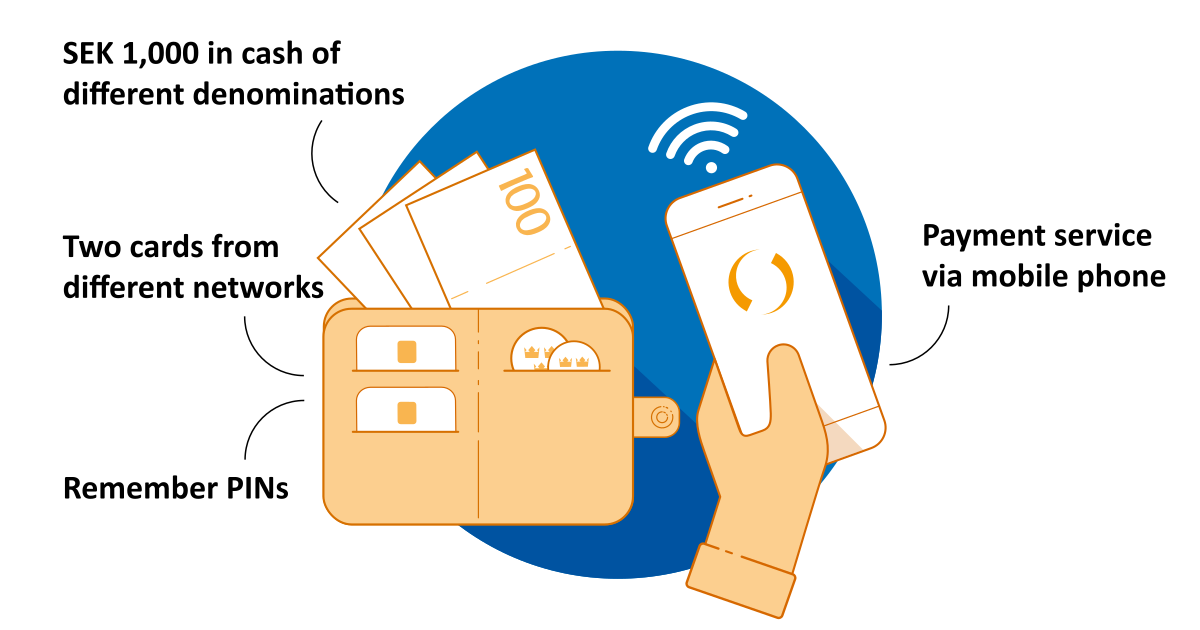
The Riksbank recommends that the general public has access to several different payment methods so that they can continue to pay if one method does not work. As far as possible, households should have cards from different card networks, access to a mobile phone payment service (such as Swish), have physical cards and PINs available, and have cash at home in mixed denominations. As a benchmark, households should have around SEK 1,000 in cash per adult, although even a lower amount can strengthen preparedness.
Everyone has a responsibility, as far as possible, to prepare for a crisis situation. Ensuring access to multiple payment options increases the possibility of being able to pay even if one of the options does not work. Households should therefore, as far as possible:
- Have cards from different card networks
- Payment service via a mobile phone, for instance Swish
- Physical cards and PINs available
- SEK 1,000 per adult
Cards from different card networks
Have cards from different card networks, for example both Visa and Mastercard, to reduce vulnerability if an individual card network or issuing bank is disrupted.
Payment service via a mobile phone
Access to a payment service via a mobile phone (for example Swish), as mobile payment services can work in certain situations even when other payment methods are unavailable.
Physical cards and PINs available
Have physical cards and PINs available to pay in situations when data communication is down. For example, when the Internet is not working to be able to pay offline.
Households should have SEK 1,000 in cash per adult
The Riksbank also recommends that the general public keep cash at home in mixed denominations in the event of disruptions in the payment system. Cash can also be used when digital payments are not possible, for example in the event of prolonged interruptions in electricity or data communication. The amount of cash needed varies from household to household, partly depending on the specific needs of the household and the household’s general level of home preparedness. As a guideline, households should hold around SEK 1,000 per adult. This guideline should be seen as a suggestion. For many households, holding a large amount of cash can be difficult, but even a smaller amount can help increase preparedness and reduce vulnerability to temporary disruptions in the payment system.
To help keep cash management going under normal conditions, so that it can also function in a crisis situation or, ultimately, war, the Riksbank recommends that households regularly use cash for payments. It will also make it easier for households and companies to recognise genuine banknotes and coins. If households and companies are used to using cash, it will be easier to use it even in a disruption.
Thanks for your feedback!
Your comment could not be sent, please try again later
Questions? Visit our FAQ on kundo.se (opens i new window).